From Runoff to Recharge
This site is under development. Stay tuned for more information on how to practice groundwater recharge in California, and check out the resources below!
Upcoming Event: Recharge Readiness Webinar Series, “On-Farm Recharge Guidance for Practitioners”
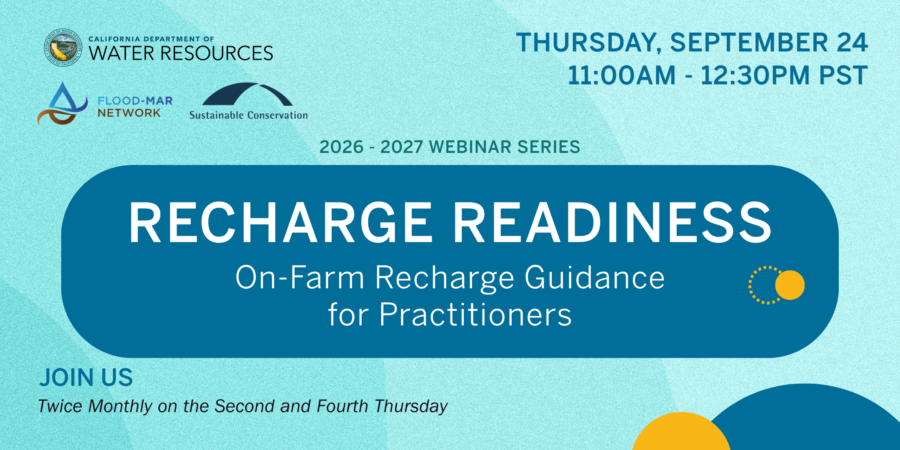
September 24, 2026
11:00am – 12:30pm
Growers are essential partners in expanding groundwater recharge—and successful implementation of local groundwater sustainability plans will depend on making on-farm recharge practical, effective, and workable in the field.
Join us for a special 90-minute Recharge Readiness session focused on the nuts and bolts of on-farm recharge. Hear about the experience of growers implementing on-farm recharge projects including what they’ve learned about field preparation, recharge methods, crop considerations, and implementation on a variety of crop types. And, explore practical resources to help growers implement on-farm recharge.
Register HereGroundwater Recharge Assessment Tool (GRAT) Viewer
The GRAT public layer viewer is a map based tool that allows any user to view the public data used in GRAT. It requires no account or user log-in. It is important to note that the more extensive full functionality of GRAT, which uses significant proprietary data from each water district, can only be accessed by users from each district or GSA for their use in making resource management decisions.
See the GRAT Viewer Viewer instructionsFrom Runoff to Recharge StoryMap
Practical strategies for how to manage and broaden recharge benefits for communities, ecosystems, agriculture, and flood risk reduction.
See the StoryMapWebsites
Flood-MAR Hub
Flood-MAR is an important climate change adaptation strategy that can help California better prepare for and manage extreme events like floods and drought.
Water for the Future
Sustainable Conservation works with the people who drink, manage, and irrigate with groundwater to implement on-farm recharge and build large-scale watershed modeling across the Central Valley.
Earth Genome GRAT site
Earth Genome and partner Sustainable Conservation developed GRAT to help secure the California’s central industry and saving some of its key exports grown virtually nowhere else in the U.S. — like almonds.
Earth Genome siteSan Joaquin Basin Flood-MAR Watershed Studies
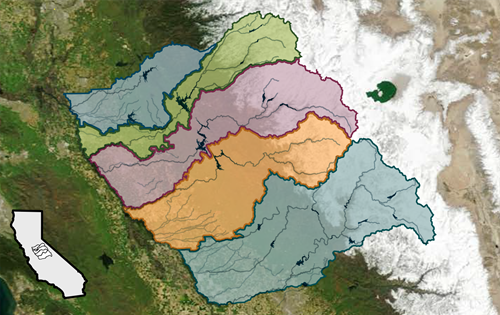
To better understand climate vulnerabilities and how to address them, the California Department of Water Resources conducted the San Joaquin Basin Flood-MAR Watershed Studies. This modeling effort explores the effectiveness of Managed Aquifer Recharge using flood flows (Flood-MAR) combined with Forecast-Informed Reservoir Operations (FIRO) to concurrently reduce flood risk, improve water supply, and enhance ecosystems across five watersheds that drain to the San Joaquin River. The studies demonstrate what’s possible with recharge, and the role it can play in creating a more water secure future for California.
Explore the studies – at a Glance
Recharge for…
Managed Aquifer Recharge (MAR) can be an effective tool for a variety of water users looking to reduce the impacts of groundwater overdraft on their agricultural operations, communities, or local ecosystems. The new ‘Recharge For’ pages linked below offer tailored information for growers, water districts or Groundwater Sustainability Agencies, community members, ecosystem managers, and policymakers who may be interested in supporting MAR projects in their area. Specific considerations, strategies, incentives, and more are identified for these users, outlining how they can develop and implement MAR projects to build resilience and support local groundwater needs and goals.
Find out more about recharge for: